Double glazing
Two panes and one cavity. With the right coating and build-up it balances daylight and insulation.
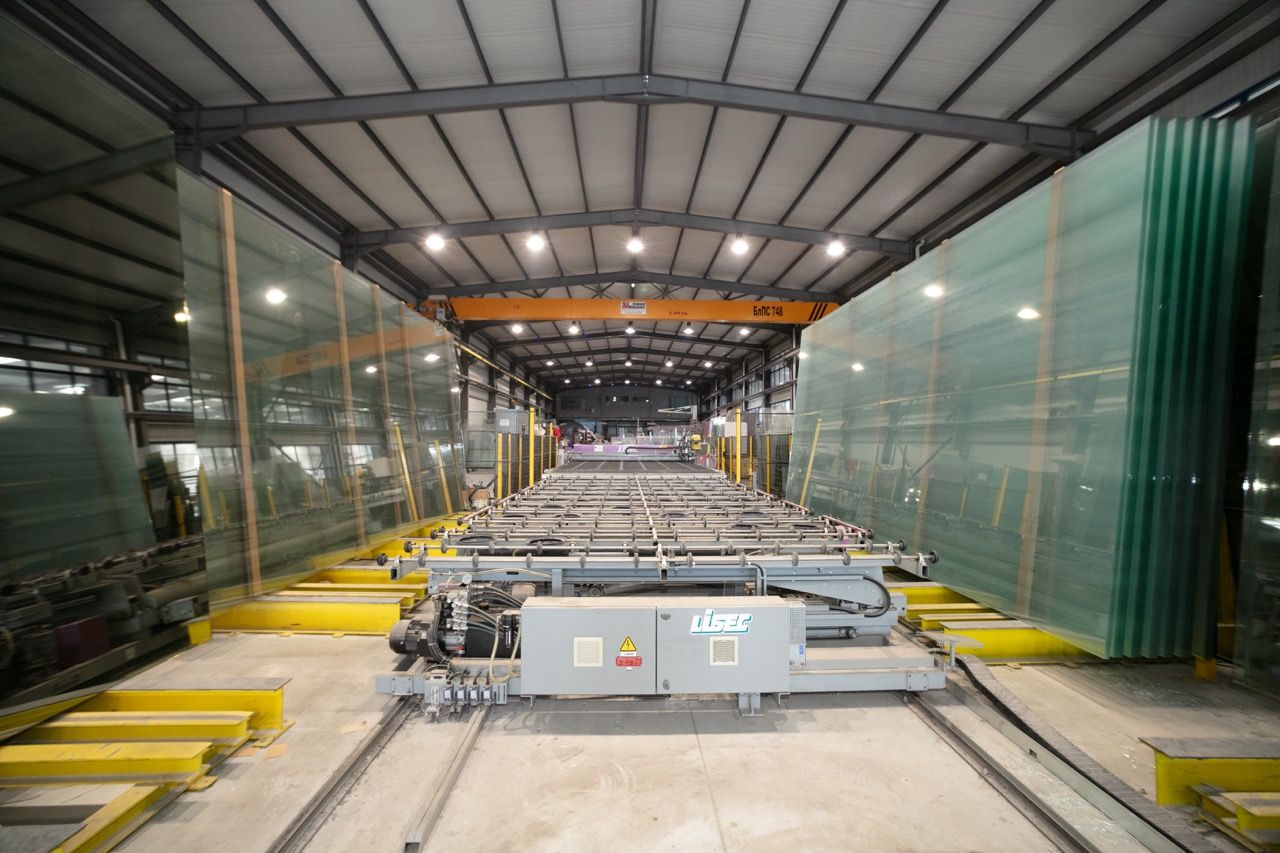
The insulating glass unit shapes warmth, daylight and noise in a room — so its build-up must match the project. We manufacture our glass units in our own factory.
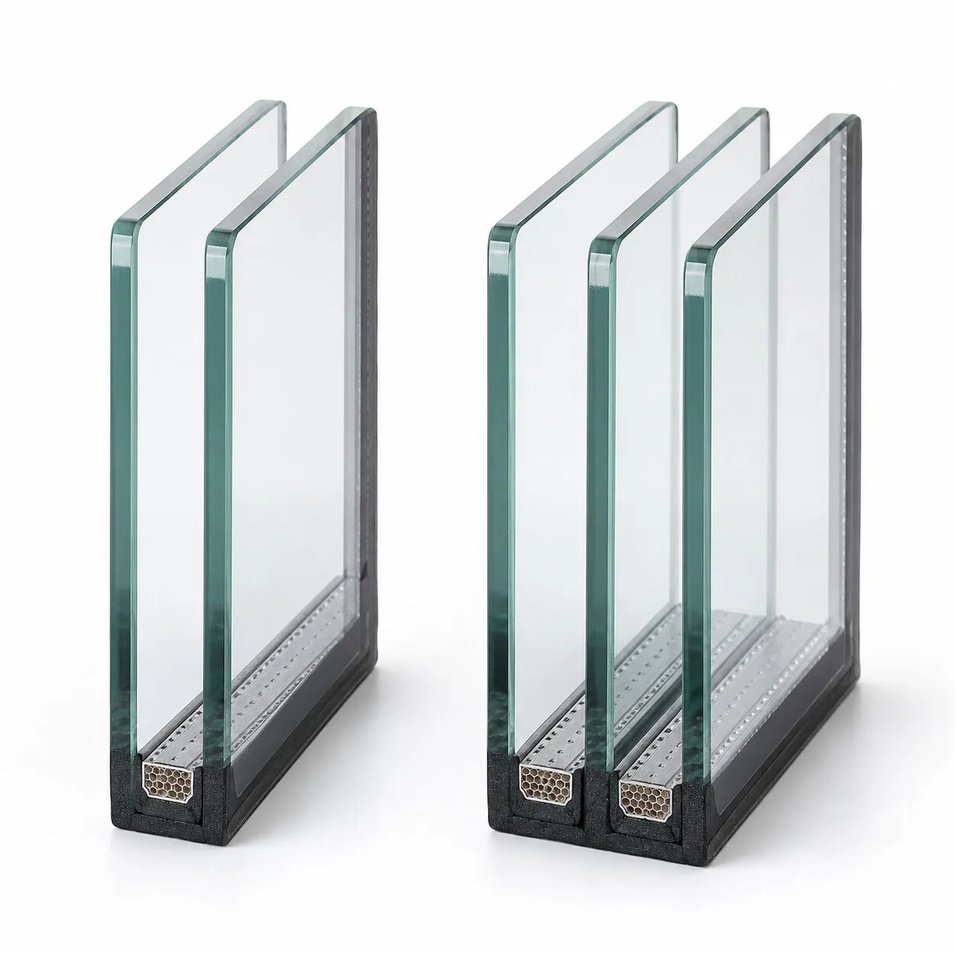
An insulating glass unit is a sealed assembly of two or more panes separated by a spacer frame. Between the panes there are one or more cavities filled with dry air or gas. The edge seal and desiccant in the spacer keep the inside dry.
The combination of glass, coatings, spacer and gas defines the performance. The final result also depends on the profile system, correct installation and conditions in the building.
Two panes and one cavity. With the right coating and build-up it balances daylight and insulation.
Three panes and two cavities. Higher insulation; the extra weight and thickness need a compatible system and hardware.
A special coating reduces heat loss while letting daylight through.
Low-E and solar-control properties: less solar heat in summer, less loss in winter.
Argon conducts heat less than air and improves the unit’s insulation.
Reduces the thermal bridge at the edge of the unit and the risk of condensation.
Besides the number of panes, the coating on the glass makes the biggest difference. We offer three types — the choice depends on orientation, climate and the size of the glazing.
Low-emissivity glass with an invisible coating that reflects heat back into the room. It cuts heat loss in winter while letting in maximum daylight.
Best for
Glass that reflects and absorbs much of the solar energy. Rooms do not overheat and air conditioning runs less.
Best for
Multifunctional glass combining low-E and solar control. It keeps the warmth in winter and the heat out in summer — comfort all year round.
Best for
Both types of safety glass replace a standard pane in the glass unit — outside, inside or both. Thermal insulation is unchanged.
Two or more panes bonded with a clear PVB interlayer. On impact the glass cracks, but the fragments stay bonded to the interlayer — they do not fall, do not cut, and the opening stays closed.
Typical use: Doors, shop fronts, floor-to-ceiling glazing, ground floors, balustrades, children’s rooms, noisy streets.
The glass is heated to about 650 °C and cooled rapidly. It becomes much stronger, and if it does break it shatters into small pieces with blunt edges.
Typical use: Large glazing and sliding doors, panes in strong sun or with dark coatings, showers, façades. On request with Heat Soak testing (EN 14179).
Choose the glass type by orientation and the number of panes by your insulation requirements.
In double and triple glazing one pane is always clear. Its position depends on the coating: with K glass the clear pane is outside and the K glass inside, so it keeps the heat in the room. With 4 seasons and Sun it is the other way round — they go outside and stop the sun before it enters, and the clear pane is inside.
Outside: clear → Inside: K
The standard for homes — good insulation at a good price.
Outside: 4 seasons → Inside: clear
South and west façades, large windows.
Outside: Sun → Inside: clear
Offices, shop windows and very strong sun.
Outside: 4 seasons → Inside: K
Year-round comfort with large south-facing glazing.
Outside: Sun → Inside: K
Strong sun and high insulation at the same time.
Matt (satin) glass lets the light in but not the view. It can be used in both double and triple glazing.
| Building / orientation | Suitable glass | Why |
|---|---|---|
| North or east façade | K glass | Little sun — keeping the heat in matters most. |
| South or west façade | 4 seasonsSun (solar control) | Strong sun — protection from overheating is needed. |
| Panoramic windows and sliding doors | 4 seasons | Large glass areas need both insulation and solar control. |
| Offices, shops, shop windows | Sun (solar control) | Many people and devices — cooling costs more than heating. |
| Buildings in Greece and on the coast | 4 seasonsSun (solar control) | Long, hot summers. |
| Replacing windows in a home | K glass4 seasons | K glass is the standard; 4 seasons for south-facing rooms. |
Each type can be used in double or triple glazing, with argon and a warm-edge spacer. When you enquire, we will suggest the exact build-up for your building.
Ug shows how much heat passes through the glass unit (lower is better). Light transmittance shows how much daylight comes in, and the g-value how much solar heat.
| Glass | Build-up, mm | Ug, W/m²K | Light | g |
|---|---|---|---|---|
| Clear glass (for comparison) | 4-16-4, argon | 2.6 | ≈ 80% | ≈ 0.76 |
| Low-E glass | 4-16-4, argon | 1.0–1.1 | 77–82% | 0.57–0.64 |
| 4 Seasons | 4-16-4, argon | 1.0–1.1 | ≈ 65% | ≈ 0.43 |
| Sun (solar control) | 6-16-4, argon | 1.0 | 25–72% | 0.17–0.42 |
| Triple with 2 Low-E panes | 4-16-4-16-4, argon | 0.5–0.6 | 65–75% | 0.43–0.55 |
| With laminated instead of one pane | e.g. 33.1-16-4 | unchanged | 1–3% lower | slightly lower |
Typical values to EN 673 and EN 410 for units with a 16 mm cavity and 90% argon. The exact values for your build-up are stated in our quotation.
Argon lowers the Ug of a Low-E unit by 0.2–0.3 W/m²K compared with air.
A warm-edge spacer (Ψg ≈ 0.03–0.04 vs ≈ 0.07 for aluminium) improves the Uw of the whole window by about 0.1 W/m²K and reduces edge condensation.
Triple unit with two Low-E panes and argon — for passive and low-energy buildings.
Operations and materials depend on the ordered build-up — double or triple glazing, coatings, sizes and special requirements.
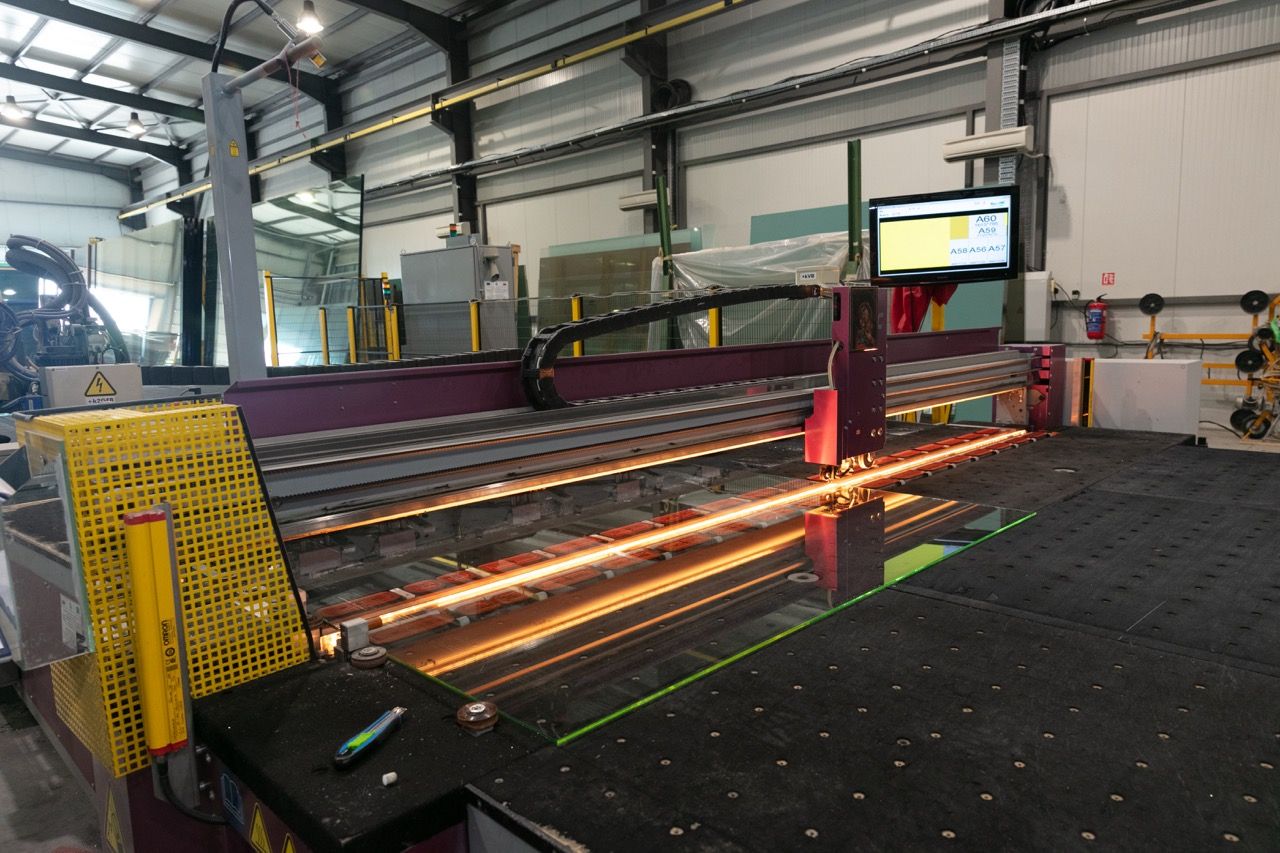
Panes are cut to size, respecting the handling rules for coated glass.
Surfaces are cleaned and dried so the cavities stay free of dirt.
The frame sets the distance between panes; the desiccant keeps the cavities dry.
Panes and frames are joined; where specified, cavities are filled with argon.
The edge seal closes the unit and protects the cavities.
Size, build-up, surfaces and seal are checked before dispatch.
When you enquire, tell us the approximate sizes, orientation, building type and your priorities: insulation, solar control, quiet or safety.
When you enquire, tell us the approximate sizes, orientation, building type and your priorities: insulation, solar control, quiet or safety.